


For a large organisation, a website stopped being "just a website" a long time ago. It's a sales channel, a compliance surface, a brand asset across multiple markets, and increasingly the thing your CRM and your identity provider all have to talk to. Treat it like a brochure and it will eventually fail you like one.
That's the gap Umbraco Enterprise is built to close. What matters is whether the platform can carry the weight of multiple brands, multiple regions, strict governance and systems that genuinely cannot go down - and Umbraco can. The question most organisations actually need answered is who's going to make sure it does.
As an Umbraco Platinum Partner, that's the bit we've spent over a decade getting right. Here's what enterprise-grade Umbraco really involves, and why each piece matters more than it might look on the surface.
Multi-site and multilingual management, from one CMS
If you're running several brands, regional sites, or both, managing them as separate platforms is how you end up with inconsistent components, duplicated effort, and a governance headache nobody signed up for.
Umbraco lets you manage multiple sites, languages and domains from a single, centralised CMS, with shared components and consistent governance across all of them. That's not a nice-to-have, it's the difference between a content team that can move quickly across markets and one that's rebuilding the same page five times a year in five different places.
Composable integrations with the systems you already run
Enterprise organisations don't get to pick a CMS in isolation. It has to sit inside an ecosystem: CRM, ERP, DAM, single sign-on, analytics, and whatever bespoke internal tooling has grown up over the years.
Umbraco's composable, .NET-based architecture is built for exactly this. We regularly connect it into platforms like Dynamics and Salesforce, DAM systems, and identity providers like Microsoft Entra ID, without forcing you into proprietary technology or a rip-and-replace approach. That matters because the CMS shouldn't be the thing that constrains what you can connect to your website — it should be the thing that makes those connections straightforward.
Governance and permissions that match how large teams actually work
The bigger the organisation, the more people touch the CMS, and the more that "anyone can publish anything" stops being a workable model. Enterprise Umbraco supports granular permissions, structured approval workflows and identity provider integration, so content moves through proper sign-off without slowing your team to a crawl.
This is one of those features that's invisible when it's working and very visible when it isn't. Getting it right at the architecture stage saves you from retrofitting governance onto a platform that was never designed to hold it.
Security and a genuine zero-downtime mindset
Mission-critical platforms need to be treated like mission-critical platforms. That means penetration-tested hosting, SSO/Entra ID integration, strict permission structures, disciplined deployment processes, and release strategies designed around zero downtime. Not "we'll fix it if it breaks."
We build this in as standard for enterprise clients, because the cost of getting security and resilience wrong at this scale isn't a support ticket, it's reputational, and sometimes regulatory.
Hosting and performance that scale globally
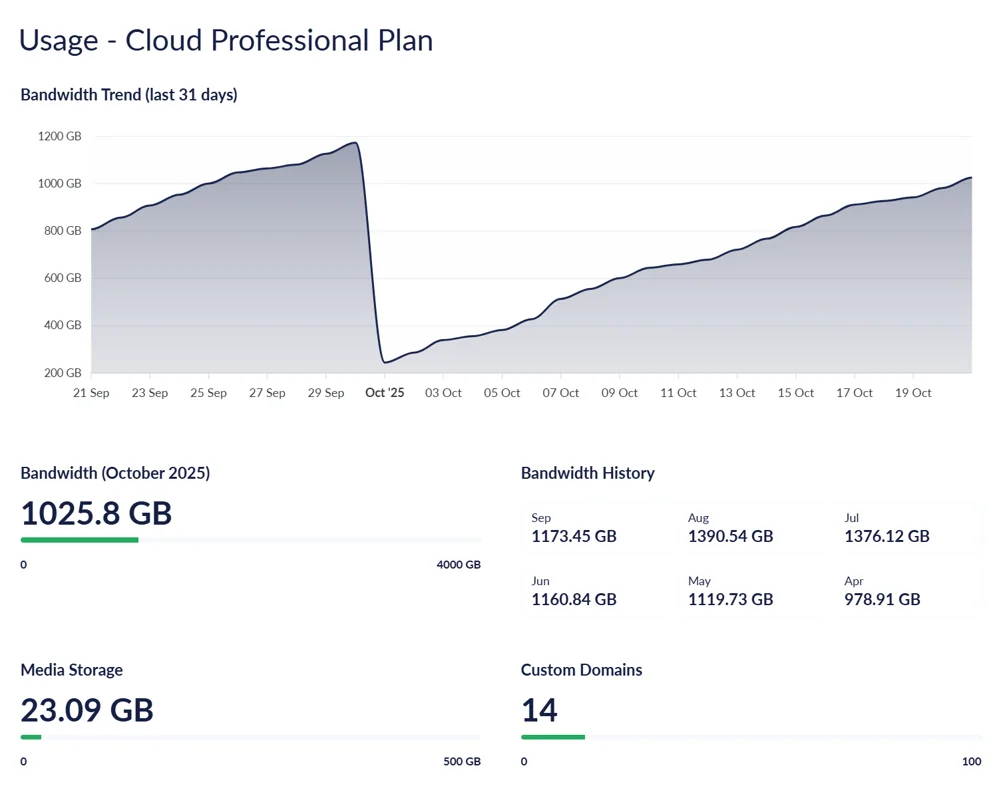
Whether that's Umbraco Cloud on Azure, custom Azure hosting, or a hybrid setup, enterprise Umbraco is built to handle serious traffic and international reach. Modern .NET performance, cloud hosting, caching and global CDNs mean the platform holds up under load rather than buckling at exactly the moment it matters most: during a product launch, a campaign spike, or a breaking news moment.
24/7 monitoring, support and SLAs that actually mean something
A platform that's mission-critical during office hours is mission-critical outside them too. We offer optional 24/7 monitoring, priority escalation routes, rapid-response SLAs and ongoing performance optimisation, because "we'll look at it tomorrow" isn't good enough when the site in question is generating revenue or holding up a public service around the clock.
Design, UX and continuous improvement — not just engineering
Enterprise work doesn't stop at "does it run." We provide UX, UI design, content modelling, A/B testing and optimisation alongside the technical build, because a platform that's technically sound but doesn't convert, doesn't get used properly, or doesn't serve your actual customers isn't doing its job either.
Strategy and consultancy that connects the CMS to the wider business
The best enterprise Umbraco builds start with discovery, architecture and content strategy. It's vital to understand how the platform needs to fit into your wider digital objectives and organisational structure, not just what fields your content types need. Get this stage right and everything downstream - governance, integrations, hosting decisions - gets a lot easier to design well.
Why we build it this way
We're an Umbraco Platinum Partner, and we've spent over ten years delivering multi-site, multilingual, heavily integrated Umbraco platforms for organisations across public sector, finance, membership, charity and corporate environments. That experience is exactly why we don't treat "enterprise" as a tier you tick, it's an operational commitment.
For mission-critical platforms, the delivery partner matters as much as the CMS itself. Reliability, governance, proactive support and absolute clarity around uptime aren't things you bolt on after go-live, they need to be part of the plan from day one. That's how we work: strategy, UX, design, engineering, integrations and support under one roof, as a long-term partner rather than a build-and-walk-away supplier. It's how enterprise clients get to scale with confidence instead of crossing their fingers.
If you're weighing up whether Umbraco can genuinely carry your organisation's requirements (multiple brands, complex integrations, strict governance, guaranteed uptime) the honest answer is yes, provided it's built and supported properly. That second part is where most of the risk actually sits, and it's where we spend most of our time.
Speak to Kevin and get advice from an Umbraco Platinum Partner who's been helping organisations get the most out of Umbraco for over 15 years.
Get in touch or email us at hello@digitalwonderlab.com.


